NEW ZEALAND POLICE : 0800 NEW COPS (0800 639 2677)

Requirements

Application Process

Requirements

POLICE ENTRY REQUIREMENTS & ASSESSMENTS

First, try our quick quiz to see if you can join NZ Police.

There are some entry requirements to complete and assessments you need to pass before you enter training at the Royal NZ Police College. You can complete them in any order.

Like any professional career, becoming a police officer doesn't happen overnight. In general it takes a minimum of six months to step through the recruitment process to reach the candidate pool.

OUR CORE COMPETENCIES AND VALUES

You will be assessed throughout the recruitment process on a range of skills including physical and academic ability. Additionally, NZ Police also have requirements on core competencies and values which are briefly outlined below.

Integrity

All police members are committed and loyal to the vision, values and goals of the organisation.

Professionalism

All police members are aware of the impact of their behaviour at all times. They maintain self-control, are resilient and present a professional image. They uphold the rule of law and maintain the guidelines, standards, policies and procedures set by the organisation.

Respect

All police members understand that their role is to acknowledge and respond to our diverse society and to serve all people with dignity. In doing so they recognise the rights, values and freedoms of all people.

Commitment to Maori and Treaty

NZ Police has a commitment to the Treaty of Waitangi principles and as such, are responsive to Maori needs and aspirations. All police members recognise this commitment and follow through by integrating Maori values and principles into their work. They recognise that by being responsive they are promoting good police practice.

Accountability for Performance

Effective performers take personal responsibility for achieving personal and team goals and targets. They set clear objectives and are committed to their work. They plan, prioritise and use their time and energy effectively to achieve desired outcomes. They promote accountability in others and take responsibility for their own actions and decisions.

Building Partnerships

Effective performers work co-operatively with others to build partnerships and achieve desired outcomes. They actively network, create and maintain relationships that inspire trust amongst all stakeholders in order to share information and co-ordinate action effectively.

Challenging for Continuous Improvement

Effective performers are flexible and responsive to the changing needs of the community and organisation. They constantly seek improvement to ensure effective and efficient service delivery. They demonstrate the ability to adapt to new situations and promote and encourage initiatives for personal and organisational improvement.

Exercising Judgement

Effective performers seek out and make full use of all available information and experience to resolve a situation. They analyse the options and associated risks while considering possible solutions within time constraints. Once the analysis has been completed, they make sound decisions or recommendations.

Influential Leadership

Effective performers communicate a vision, provide direction, coordinate and develop individuals and teams. They inspire and motivate others through personal example, while enabling colleagues to maximise potential. They use a combination of authority and influence at all levels of the organisation.

Strategic Development

Effective performers think strategically when planning for the future. They develop national, district or service centre strategy that determines business and operational planning and policy.

NZ POLICE RECRUITS FITNESS REQUIREMENTS

Applicants must be physically fit and in excellent health. There is no minimum height requirement. Tests are the Physical Appraisal Test (PAT), and the Physical Competency Test (PCT).

It is important that applicants meet the police fitness requirements to enable them to complete defensive tactics training at the Royal NZ Police College and to cope with the myriad of potentially dangerous and random events that confront them every day in an operational setting as a police officer.

Rehearsals for the Physical Appraisal Test (PAT)

To give you a chance to practice for the real PAT, free rehearsals are run regularly by Police Physical Education Officers. Your physical ability and fitness will be assessed and you’ll get advice on how to achieve the fitness requirements for the real test.

We recommend that you don't sit the actual PAT until you can comfortably pass a rehearsal. You can do as many rehearsals as you like.

PAT Rehearsal bookings: contact 0800 NEW COPS (0800-639-2677)

You will be tested on four basic elements. These are:

The time it takes for you to run 2.4 kilometres

Male

  • Under 20 years: 10 min 51 seconds
  • 20 - 29 years: 10 min 15 seconds
  • 30 - 34 years: 10 min 50 seconds
  • 35 - 39 years: 11 min 30 seconds
  • 40+ years: 12 min 15 seconds

Female

  • Under 20 years: 12 min 54 seconds
  • 20 - 29 years: 11 min 50 seconds
  • 30 - 34 years: 12 min 25 seconds
  • 35 - 39 years: 13 min 10 seconds
  • 40+ years: 14 min 10 seconds

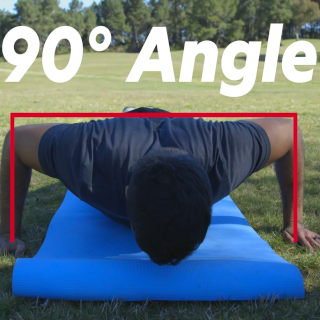
Your vertical jump ability. For men this should be at least 48cm; for women, at least 40cm. The number of correctly executed continuous press-ups you can do. For men this should be 34 or more; for women, 20 or more.

A test of your grip strength which ensures you have the grip and forearm strength to operate firearms and to restrain and handcuff people. For men the combined total of both hands should be at least 96kg; for women, at least 52kg.

BMI data will be captured, and used in conjunction with a waist to hip ratio to advise applicants of programs to undertake weight reduction and therefore increase both health and fitness levels if required.

A PAT Rehearsal will provide more information about these tests.

The Physical Competency Test

The PCT establishes your ability to cope with the routine physical tasks that are part of frontline police work. All police officers have to pass this every two years.

You will be tested in 12 physical tasks including a 200 metre run, pushing a trailer, walking along a raised beam, crawling under hurdles, and climbing through a window. They shouldn’t be difficult tasks for people with average strength, fitness, balance and co-ordination.

These standards serve to maximise officer safety by minimising risk and are designed for the protection of both the officer and the offender.

MEDICAL REQUIREMENTS FOR NZ POLICE ENTRY

Good eyesight required

Applicants must have good eyesight, defined as a minimum visual standard of 6/12 unaided in each eye, correctable to 6/6 with contact lenses or eyeglasses. There are no exceptions.

Any applicant who wears or has worn glasses or contact lenses either full-time or part-time, has any form of colour blindness or has had corrective eye surgery, must contact the recruitment office to arrange an eye test by a police approved optometrist (at the applicant’s expense).

Report asthma, operations and injuries

Applicants must notify the recruitment office if they have ever had asthma (to any degree), have ever had any significant operations, or significant knee, neck, back or joint injuries. If in doubt, talk to your recruitment expert.

Health Questionnaire

The Health Questionnaire assesses your physical ability to perform the frontline duties of a constable. Key areas of concern are physical agility, asthma, eyesight, hearing and mental health. Where appropriate, you must provide specialists’ reports (again - at your expense) to verify your fitness to join the Police.

Final Medical Clearance

For those who successfully complete the recruitment process, there is one last check. This is a final medical clearance, given after a full examination by a police nominated physician and an optometrist. This is paid for by Police.

PERSONALITY PROFILING OF NZ POLICE RECRUITS

Personality traits have an impact on how people behave at work and within other settings.

Personality profiling is a written questionnaire designed to provide a picture of your likely strengths and weaknesses in specific personality areas, relevant to police work.

The assessment provides your recruiter with a guide as to what motivates you, what attitudes you have, what emotional characteristics you have, and how you handle interpersonal interactions.

INITIAL INTERVIEW WITH YOUR RECRUITMENT OFFICER

The initial interview is conducted by a recruitment expert. He or she will be your point of contact throughout the remainder of the recruitment process.

Certain “behavioural competencies” are essential for NZ police officers.

This interview is to gather information on how competent you are in these areas and to assess your potential to become a police officer. The recruitment expert will ask you about specific examples or occasions when you have displayed the required behaviours.

SCOPE TESTS AND FINGERPRINTING

SCOPE is an acronym that stands for Surroundings, Conditions/descriptions, Organisation, People/prospects, and Effects/education/training. It is a chance for you to experience first hand what being a police officer is all about.

SCOPE has two parts. The first is spending around 40 hours at a police station, where you will observe as many different aspects of police work as possible. The officers who work with you during the 40 hours will evaluate you in relation to the core competencies required to be a police officer.

The second part of SCOPE is some reading material that will provide you with useful information about the job. You will be tested on the content of the reading material.

SCOPE sessions are arranged by the police recruitment expert as part of your recruitment process.

Fingerprinting

You will also be required during this time to have your fingerprints taken. These will then be checked against our database and if you are successful in your application, will be held on a database for elimination purposes from crime scenes you may attend as part of your work.

If you do not wish to have your fingerprints taken we will not be able to proceed any further with your application.

ACADEMIC ASSESSMENT

The academic and problem-solving assessments measure general intellectual skills. They test your ability to see relationships and solve problems.

There are three parts to the academic assessment. They are: Verbal, Numerical and Abstract Reasoning.

It is important that all police recruits have the ability to pass these assessments as they are an indicator of a person’s ability to cope with the intellectual demands of police training and police work. Struggling to pass them would indicate that you would benefit from developing these skills before going to the Royal NZ Police College.

There is a huge range of books on psychometric testing available from your book shop to help you prepare for the assessments.

PC/KEYBOARD SKILLS TEST

The evolution of technology in society highlights the importance of possessing well-rounded computer skills. General PC skills such as email, researching online and formatting documents in Microsoft Office should be at a level where you can successfully operate in a tertiary and business environment.

The PC/Keyboard Skills Test simply gauges your familiarity with Windows-based personal computer software and your basic keyboard and mouse skills. You will be required to open Microsoft Word on a PC, which will be provided, and do a 10 minute copy-typing test. The minimum typing speed is 25 words per minute.

CERTIFICATES REQUIRED

Swimming Cerificiate of Competency

This involves:

  • Swimming 50 metres within 54 seconds.
  • Treading water for 5 minutes.
  • Duck dive 3 metres to retrieve a rubber brick.

Please ask your recruitment staff member where your closest police qualified swim complex is in order to sit the test.

The First Aid and Advanced Driving Skills certificates are not required until you have passed the academic and physical appraisal tests.

Workplace First Aid Certificate

You need to get this certificate which covers NZQA units 6400, 6401 and 6402. Major providers include St John and the Red Cross.

Advanced Driviing Skills Certificate

You’ll also need an approved Advanced Driving Skills Certificate. See the Land Transport New Zealand web site for details.

BACKGROUND CHECK: NZ POLICE RECRUITS

Referees

Police will talk to between three and six referees to check your suitability for entry into a career with the NZ Police. Appropriate referees would be past or present employers, people of good standing in the community who have known you for a significant length of time, and officials of clubs you belong to.

Home Visit

This is an opportunity for us to observe you in the environment in which you are comfortable.

It is also a chance for your family to ask any questions about training at the the Royal NZ Police College and what it is like having a police officer in the family. You will be there for five months, which will have an impact on your family life.

Your family may also want to ask questions about a police career and the lifestyle of a “police family”.

PASS THE PAT

Click the link below to see what’s involved in the Physical Appraisal Test, and the fitness levels you’ll need to pass it.

Pass the PAT

PASS THE PCT

Click the link below and watch recruits tackle the 12 different obstacles in the final Physical Competency Test.

Pass the PCT

The Physical Competency Test is a timed run on an obstacle course, and you’ll need to pass it before starting police college. Watch recruits tackle the 12 different obstacles on the course, and find out what time you’ll need to achieve to be accepted.